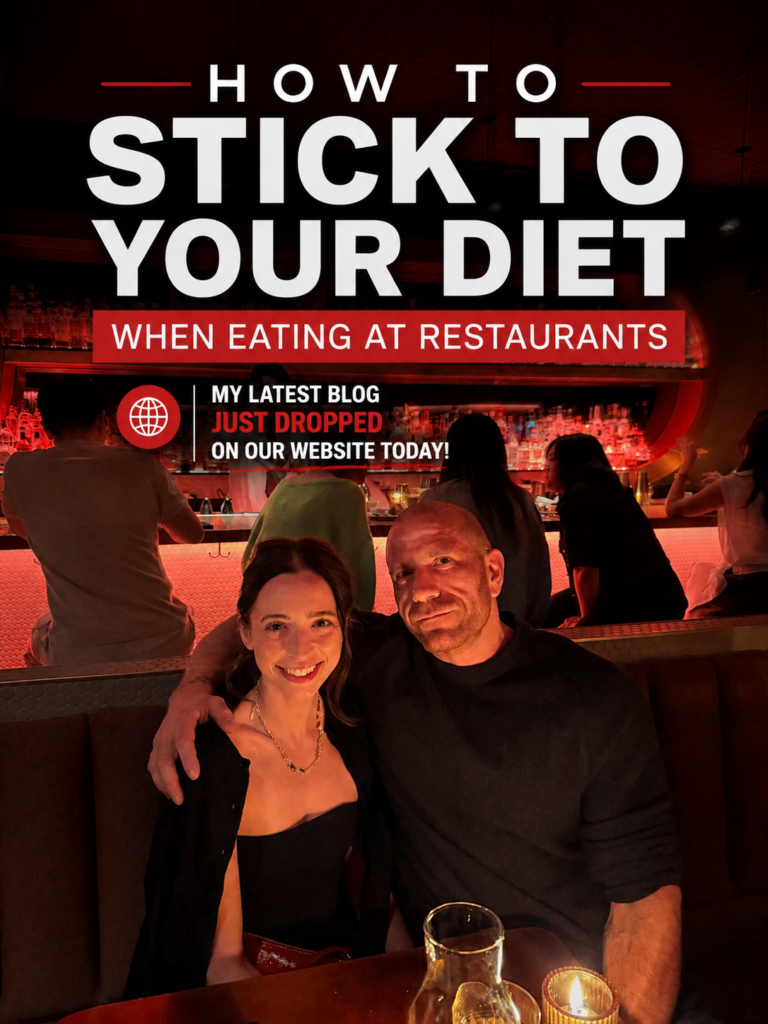
One of the biggest misconceptions in the fitness industry is that if you’re trying to lose body fat or build muscle, you have to avoid restaurants altogether.
I disagree.
The reality is that you can absolutely enjoy meals out with friends, family, or coworkers without sabotaging your progress. You just need to approach it with a plan instead of relying on willpower once you get there.
Here are the strategies I recommend to my clients.
1. Look At The Menu Before You Arrive
This is one of the easiest ways to make better decisions.
Instead of waiting until you’re hungry and surrounded by tempting options, spend two or three minutes looking at the menu online before you leave home.
Decide exactly what you’re going to order before you even walk through the door.
When you’ve already made your decision, you’re much less likely to be influenced by everyone else at the table ordering appetizers, desserts, or drinks.
2. Prioritize Protein
No matter where you’re eating, your first priority should always be protein.
Chicken, steak, fish, seafood, lean burgers, turkey, eggs, or other quality protein sources should form the foundation of your meal.
Protein helps keep you full, supports muscle recovery, and makes it much easier to stay on track with your daily nutrition goals.
Once protein is taken care of, you can build the rest of the meal around it.
3. Keep Your Meal Simple
Many restaurant meals become unhealthy because of everything that’s added to them—not necessarily the main ingredients themselves.
A grilled chicken breast with rice and vegetables is a completely different meal than chicken covered in creamy sauces with fries and garlic bread on the side.
Simple almost always wins.
The fewer extras, sauces, and toppings, the easier it is to control calories while still enjoying your meal.
4. Don’t Drink Your Calories
Sugary cocktails, soft drinks, fancy coffees, and alcoholic beverages can easily add hundreds of calories without making you feel any fuller.
If your goal is improving your physique, stick with water, sparkling water, diet beverages, or another low-calorie option.
You’ll enjoy the meal just as much and leave without consuming unnecessary calories.
5. Ask For Modifications
Most restaurants are happy to make small adjustments.
Ask for sauces or dressings on the side.
Swap fries for vegetables or a salad.
Choose grilled instead of fried.
Request double vegetables instead of extra starch if that better fits your nutrition plan.
These simple changes can dramatically improve the nutritional quality of your meal without making you feel like you’re dieting.
6. Don’t Feel Obligated To Finish Everything
Restaurant portions are often far larger than what most people actually need.
Remember that you don’t have to clean your plate.
Eat until you’re comfortably satisfied, then take the rest home for another meal.
Not only does this help you control your portions, but it also gives you lunch for the next day.
7. One Meal Doesn’t Make Or Break Your Progress
This is probably the most important point.
Too many people think they’ve “ruined everything” after one restaurant meal.
Then they turn one indulgent dinner into an entire weekend of poor eating because they figure they’ve already blown their diet.
Your results are determined by what you consistently do over weeks, months, and years—not by one meal.
If you enjoy a higher-calorie dinner, simply get back to your normal routine at the very next meal.
No guilt.
No punishment.
No endless cardio.
Just consistency.
Final Thoughts
Eating at restaurants doesn’t have to be the enemy of your fitness goals.
You don’t need to avoid social events or bring your own Tupperware everywhere you go.
The people who achieve long-term success aren’t the ones who never eat out—they’re the ones who learn how to make smarter choices when they do.
Fitness isn’t about perfection.
It’s about making good decisions consistently enough that they become part of your lifestyle.
That’s what creates results that actually last.
Yours in Good Health,
Nick Cosgrove
Forever Fit Performance