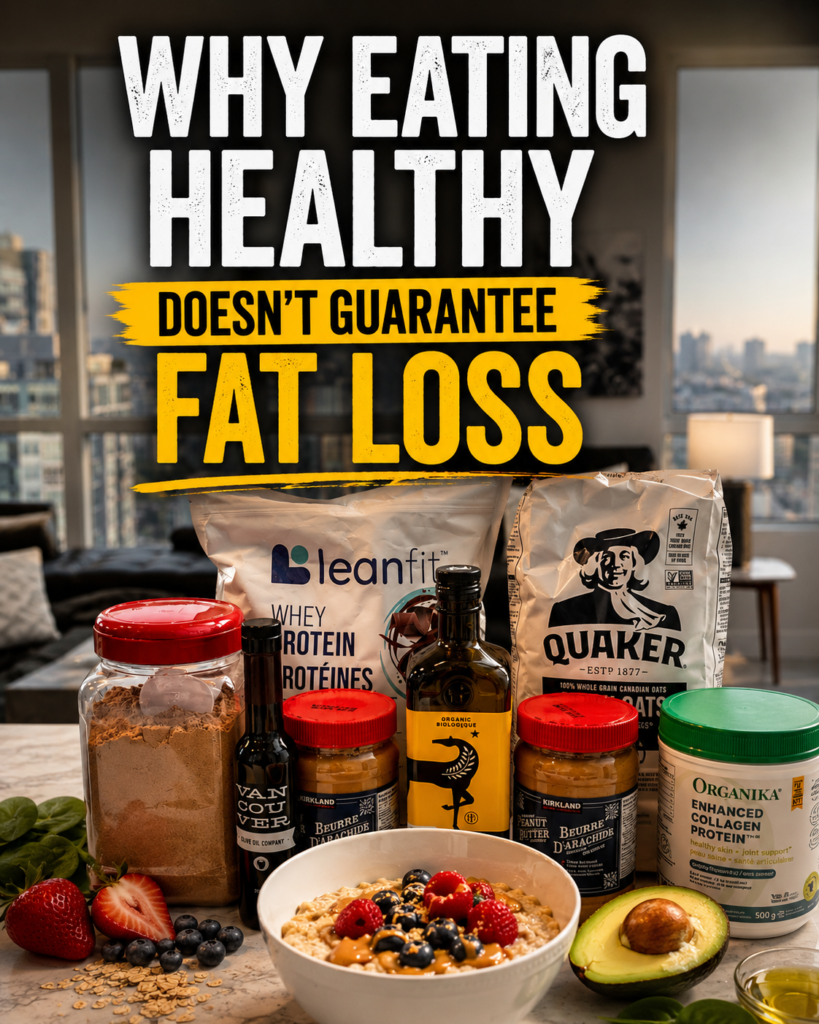
Walk into any grocery store today and you’ll find entire aisles dedicated to “healthy” foods.
Organic.
Natural.
Gluten-free.
Low sugar.
High protein.
Keto.
Vegan.
While many of these foods can absolutely be part of a healthy diet, here’s the truth that surprises a lot of people:
Just because a food is healthy doesn’t mean you can eat unlimited amounts of it and expect to lose body fat.
After more than 25 years of coaching clients, this is one of the biggest mistakes I continue to see.
Healthy Foods Still Contain Calories
This is where many people get tripped up.
Calories don’t suddenly disappear because a food has great nutritional value.
Some of the healthiest foods on the planet are also some of the most calorie-dense.
For example:
- Nuts
- Natural peanut butter
- Avocados
- Olive oil
- Trail mix
- Granola
- Smoothies
- Dried fruit
These foods are packed with nutrients and can absolutely be included in a healthy nutrition plan.
But they’re also incredibly easy to overeat.
A few extra spoonfuls of peanut butter or a generous pour of olive oil every day can quietly add hundreds of calories to your intake without you even realizing it.
“But I’m Eating Clean…”
I hear this almost every week.
“Nick, I don’t understand. I’m eating healthy.”
My first question is usually:
“How much are you eating?”
Someone can eat chicken, rice, oatmeal, fruit, vegetables, nuts and healthy fats all day long…
…and still gain body fat if they’re consistently consuming more calories than their body needs.
The quality of your food matters.
But so does the quantity.
Portion Sizes Matter More Than Most People Think
Many people are surprised when they actually measure their food for the first time.
What they thought was one serving of peanut butter might actually be two or three.
That handful of almonds?
It may contain far more calories than expected.
Even healthy cooking oils can significantly increase the calorie content of an otherwise well-balanced meal.
None of these foods are “bad.”
They simply need to fit your overall nutrition plan.
Calories Still Count
One of the biggest myths circulating online is that calories don’t matter if you’re eating “clean.”
Unfortunately, your body doesn’t work that way.
If your goal is fat loss, you still need to consume fewer calories than you burn over time.
That doesn’t mean starving yourself.
It doesn’t mean cutting out carbohydrates.
And it certainly doesn’t mean eliminating every food you enjoy.
It simply means understanding how much you’re eating and making sure your intake aligns with your goals.
Focus On Balance, Not Perfection
The goal isn’t to avoid healthy fats or nutritious foods.
The goal is to eat them intentionally.
Build your meals around:
- Lean protein
- Vegetables
- Fruit
- Whole grains and quality carbohydrates
- Healthy fats—in appropriate portions
When your nutrition is balanced, you don’t have to rely on crash diets or endless hours of cardio.
Final Thoughts
Healthy food is exactly what your body needs.
But healthy doesn’t automatically mean fat-loss friendly if portions are consistently too large.
Fat loss isn’t about avoiding good foods.
It’s about eating the right foods in the right amounts, consistently.
The people who achieve the best long-term results aren’t the ones following the latest nutrition trend.
They’re the ones who understand that both food quality and food quantity matter.
Because at the end of the day, eating healthy is an excellent place to start…
But eating healthy in the right portions is what gets results.
Yours in Good Health,
Nick Cosgrove
Forever Fit Performance