Following a consistent workout routine is one of the best things you can do if you want to build muscle, improve your strength, and change your physique.
Repeating the same workouts allows you to become more efficient at each exercise, improve your technique, and accurately measure your progress. If your exercises change every time you enter the gym, it becomes difficult to know whether you are actually getting stronger or simply doing something different.
The problem isn’t repeating your workouts.
The problem is repeating the same level of effort and expecting your body to continue changing.
Your Body Needs a Reason to Adapt
Your body is incredibly good at adapting to the demands you place on it.
When you first begin a training program, almost everything feels challenging. The exercises are unfamiliar, the weights feel heavy, and your muscles are being exposed to a new level of stress.
As the weeks pass, your technique improves and your body becomes better prepared to handle those workouts. That is exactly what you want to happen—but it also means you eventually need to increase the challenge.
If you continue using the same weights, completing the same number of repetitions, and training with the same intensity, your body may no longer have a strong enough reason to build additional muscle or strength.
You are still exercising, but you may no longer be progressing.
Progression Doesn’t Mean Changing Everything
Many people assume they need an entirely new workout every few weeks to prevent their body from adapting.
They don’t.
A well-designed training program should give you enough time to learn the exercises, improve your execution, and become stronger within that structure. Constantly changing every exercise can actually make progression more difficult because you never spend enough time mastering anything.
Progression usually comes from making small, strategic adjustments to the program you are already following.
You might:
- Increase the weight while maintaining proper form.
- Complete more repetitions with the same weight.
- Improve your control and range of motion.
- Add an additional working set when appropriate.
- Reduce unnecessary rest time.
- Improve the quality and intensity of each set.
- Replace an exercise that is no longer effective or comfortable.
These adjustments may appear small, but they create a new challenge for your body without forcing you to completely rebuild your routine.
Track What You’re Doing
If you don’t track your workouts, it becomes very easy to mistake attendance for progress.
Showing up consistently matters, but you should also know what you are trying to improve.
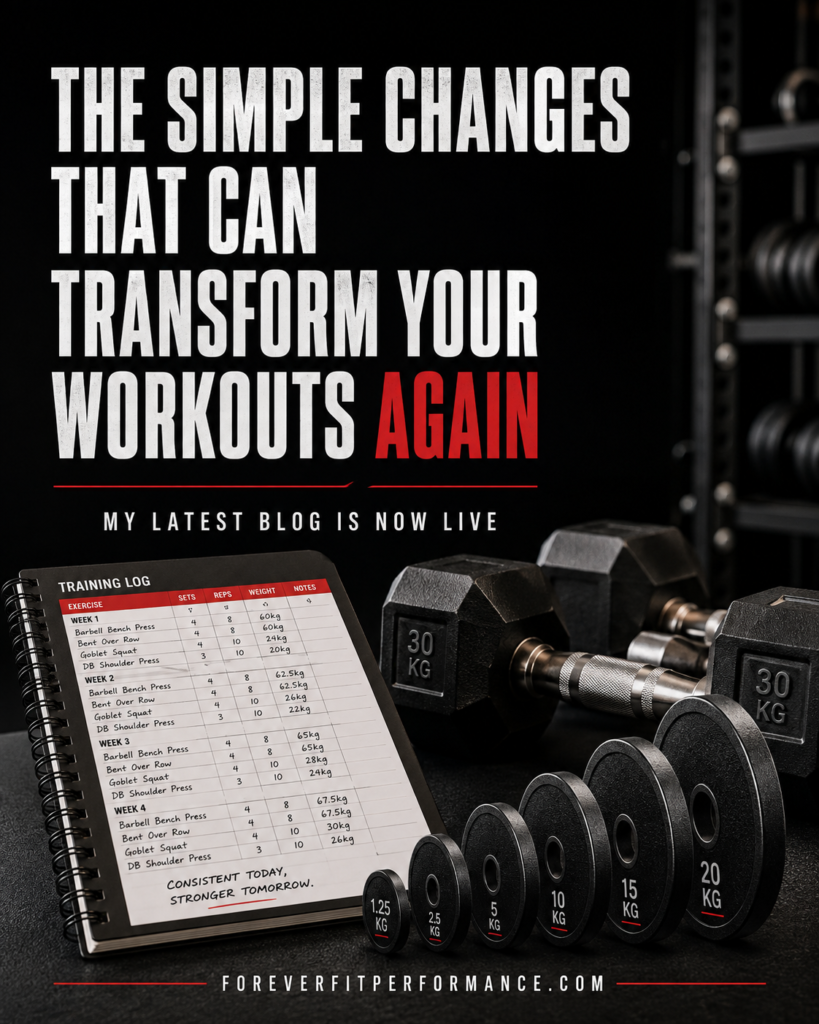
Record your exercises, weights, repetitions, and working sets. This gives you something measurable to beat the next time you perform the workout.
Progress doesn’t have to mean adding weight every week. Sometimes progress is performing an extra repetition, controlling the weight more effectively, improving your technique, or creating a stronger muscular contraction.
If your performance is improving, your program is still doing its job.
Effort Still Matters
A perfectly designed workout program will only produce results if you are willing to work hard enough.
As you become more experienced, you may need to push closer to your physical limits to create the same training stimulus. The workout written on paper may not have changed, but the intensity you bring to it must continue to evolve.
Simply completing the prescribed sets and repetitions is not always enough. Your working sets need to be challenging, focused, and performed with purpose.
That doesn’t mean sacrificing technique or lifting weights you cannot properly control. It means getting more out of every repetition instead of simply going through the motions.
Know When Adjustments Are Needed
You do not need to change your program simply because you have followed it for a certain number of weeks.
However, adjustments may be helpful when:
- Your strength has stopped improving for an extended period.
- You are no longer able to create a strong muscular contraction.
- Certain exercises cause pain or discomfort.
- Your recovery is consistently suffering.
- Your goals or physical needs have changed.
- The program no longer challenges you.
The goal is not to constantly chase novelty. The goal is to make purposeful changes when they are required.
Consistency Creates the Foundation—Progression Builds the Results
Repeating a structured workout routine is not a bad thing. In fact, it is one of the most effective ways to develop better technique, track your performance, and build long-term progress.
But consistency does not mean standing still.
Your exercises can remain familiar while the demands placed on your body continue to increase. Small improvements in weight, repetitions, execution, intensity, and overall performance can completely transform the results you get from the same routine.
Keep the structure that allows you to measure your progress.
Then give your body a reason to keep changing.
Yours in Good Health,
Nick Cosgrove
Forever Fit Performance